(Adapted from recent article in the Jerusalem Post by Herzl Kosashvili)
Rabbi Avraham Wolff’s phone rang before dawn. The first word he heard was “bombs.” One hundred and twenty-four children, the middle of the night, bomb shelters. Alina Chubatova, the Director of the Mishpacha Orphanage in Odessa, Ukraine, told me the caregivers were up within minutes. “Nobody needed instructions,” she said. “Everyone knew what to do. Everyone knew the children were watching them, and that if they fell apart, the children would fall apart. So they didn’t fall apart.”
Twenty-three of the children at the orphanage have no relatives anywhere in the world: no parent, no grandparent, no distant uncle to call in an emergency. Among the 23, for whom Rabbi Wolff, Chief Rabbi of Odessa, and his wife, Chaya, have taken personal and official responsibility (legal guardianship), are Danny and Mendy.
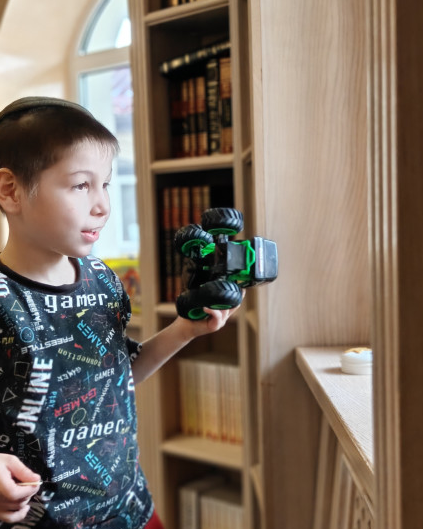
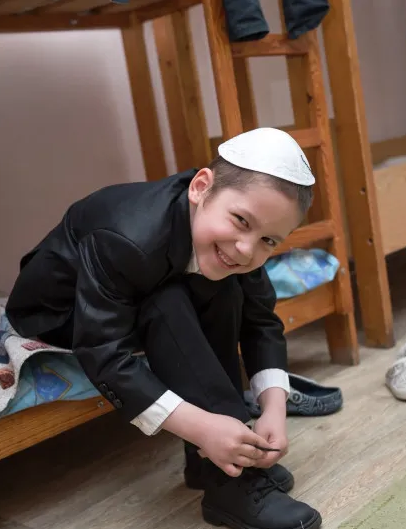
Danny was born in December 2018 (and given the name Deni), to a young woman who disappeared when the boy was just 18 months old. She did not die, was not hospitalized, did not move to another city; she walked away one day and never came back. He was in the Ukrainian orphanage system for several years; Danny is on the autism spectrum. His brother, Mendy (originally named Anton), born one year later, also came to the orphanage when his mother again disappeared.
Rabbi Wolff explained, “They told us there were two Jewish children. There was nothing to think about. We took them. [J]ewish children, they have no one. This is what we do. Period.”
The past year, with the frequent air strikes on Odessa, has been particularly difficult:
“We went down to the shelter this past year more times than I can count,” Alina Chubatova says in a flat voice. “The children know the drill by now. They wake up, take their blanket, and go down. There are children who also take one toy, because they’re allowed one toy. And there are children who take exactly the same toy every time. The very same one. Because that is what helps them feel that something stays.”
The caregivers describe a job that demands a daily, renewed decision to remain in their jobs:
“There are days when I drive home and ask myself why I’m coming back tomorrow,” one of them said, with an honesty that surprised me. “And then I walk in the next morning and Danny is already standing at the window, and Mendy is already running down the hall making half the house laugh, and I know exactly why.”
“The children feel everything,” said another. “When we’re afraid, they’re afraid. When we’re tired, they’re tired. So we don’t show it. Even when the window rattles from an explosion nearby, we smile and say it’s fine. And slowly, it becomes fine.”
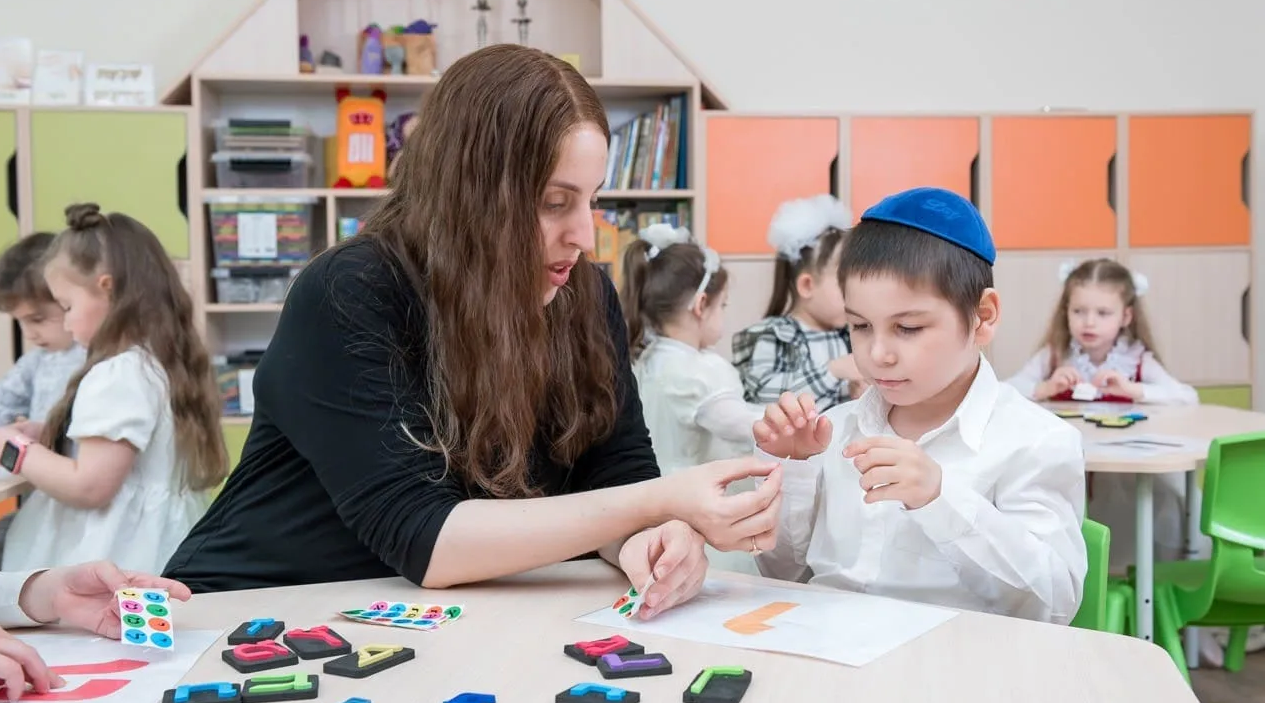
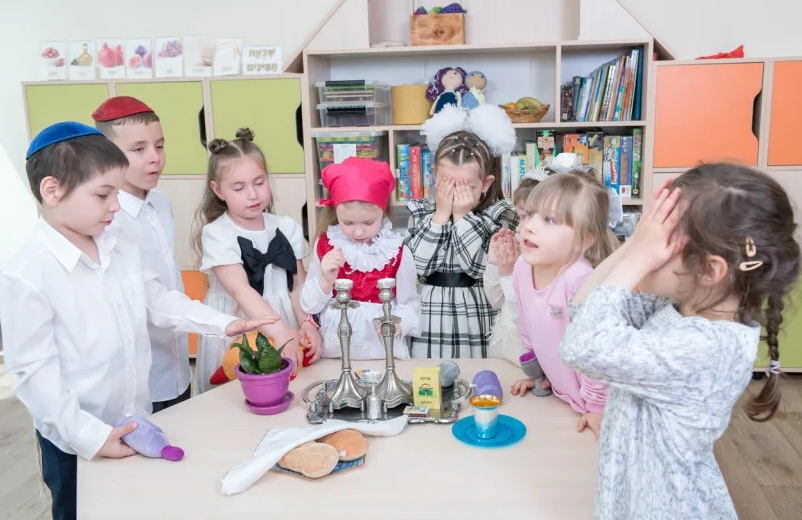
The Mishpacha orphanage, an institution we proudly support, is a remarkable place that serves as a family to more than 120 children, filled with love, care, and support. The family includes a boy born to a mother who disappeared. Who arrived at a place where his position on the spectrum was treated not as a reason to give up but as a reason to invest more. Who was a survivor at three and a half, huddled under a blanket in the corner of a room. Who now goes to school holding his little brother’s hand, with a teacher who learned his language.
The family includes a rabbi who for 34 years has done one thing: answered when someone calls to say there is a child with no one. It includes Rebbetzin Chaya Wolff, who stands behind every child arriving at school in a new uniform, behind every trained teacher, behind every decision made quietly in a small room full of papers.
And the family includes a director who knows how many times they have gone down to the shelter and does not mention it because it no longer surprises her, and caregivers who smile when the window rattles.
We hope and pray this year will bring peace, joy, and happiness to the children and staff of the Mishpacha Orphanage, to the people of Ukraine, and all across the world.
Together we save lives and restore hope.